
More... history

Dorothy Dallimer
ACHIEVEMENTS: Ensured that vital wartime communications remained operational. Dorothy Ann Daphne Dallimer, born on December 1, 1889, in Lowestoft, was awarded the British Empire Medal (BEM) during World War II. As an Assistant Supervisor, Class II, at the Lowestoft Post Office, she displayed remarkable bravery and unwavering dedication by ensuring efficient telephone services despite the perilous air raids of 1941. Her courageous actions ensured that vital communications remained operational during these critical times.

Lowestoft Overseers of the Poor Accounts (1656-1712)
The largest administrative task by far to demand both the attention and the time of the parochial authorities in Lowestoft during the Early Modern period was relief of the poor – a weighty responsibility placed upon English parishes by the formative Poor Law Act of 1601. And the fortunate survival of Overseers of the Poor account books for the period 1656-1712 (former Suffolk Record Office (Lowestoft) - 01/13/1/1&2) reveals much about the implementation of this legislation.


Samuel Morton Peto and the Wider European World
Centuries of Ongoing Change
Denmark Road, Flensburgh Street and Tonning Street: three closely connected roads near the shopping-centre and railway station of the Suffolk coastal town of Lowestoft (the UK’s most easterly community). What possible connection can there be between this trio, the most southerly located of the Scandinavian countries and two towns in the German state of Schleswig-Holstein?

Bank on the Mark IV Tank
A fitting tribute to Henry Browne, Clifford Brewster, and the other Lowestoft men who lost their lives serving with tank units in both world wars.


Lowestoft Almshouses
The first almshouses in Lowestoft were provided by John Manyngham, the parish vicar from 1457-78. The exact year of institution is not known, but they were located on the north side of Fair Lane (now Dove Street) near its junction with West Lane (now Jubilee Way). And they seem to have remained in operation, in some form – undoubtedly with alterations made – into the final quarter of the 19th century, when White’s Directory of Suffolk (1874), p.

Bequests for the Relief of Poverty, 1560-1730
For centuries, the use of alms boxes in parish churches throughout the whole of England was a means of collecting sums of money for charitable purposes – particularly the relief of poverty where it was known or seen to exist. During the 16th century, as a result of general cost inflation (aggravated by Henry VIII’s mindless extravagance and debasement of the coinage, to say nothing of the social and economic problems caused by the Dissolution of the Monasteries), the alleviation of financial distress in the lower levels of society became more and more of a challenge.

Exciting technical discovery
.. but definitely nerdy lol
It would be great when providing an online primary source if you could link directly to the relevant phrase/sentence within a long external page. Well it seems you CAN!
Syntax
[URL]#:~:text=[RELEVANT%20PHRASE]
So instead of
https://www.gutenberg.org/files/25852/25852-h/25852-h.htm > then telling people to scroll down 300 paragraphs and you will find relevant section. You can do this…

Outsider Presence in Lowestoft 1561-1730
(Parish Register Entries)
The register entries below are presented in as close a way as possible to the original handwritten ones
Photo opposite - The interior of St. Margaret’s Church in 1786 - historic repository of the Lowestoft parish registers - captured by Richard Powles (1763-1807). This ink-and-wash study is to be found in Isaac Gillingwater’s ‘Drawings Illustrative of the History of Lowestoft, Mutford and Lothingland’ (Suffolk Archives, Ipswich - ref. no.193/2/1).

NOT HOME FOR CHRISTMAS
On 15 December 1914 the sailing trawler Queen of Devon left Lowestoft for the fishing grounds. It was reckoned that the vessel would be home on 22nd December
Occupied Ground space 1600s
Nos. 5 -25 High Street
Nos. 26-33 are part of an overall sequence of town properties (1-271, in all) showing their transfer, as recorded in the manor court minute books.
They relate specifically to what once occupied the land later taken up by Nos. 5-25 High Street.
Extracted in this form from The Town of Lowestoft c. 1720-25: People and Property in a Pre-Industrial Coastal Community (Lowestoft Heritage Workshop Centre, 2019).
Properties on West Side of High Street in 1618
(North of Mariners Street)
- Moving from North to South.
- Occupying former agricultural land and of freehold tenure.
- All properties fronting the High Street.
East end of the North Field
1. John Burgis - house, garden & adjoining arable enclosure (seven-eighths of an acre).
2. Agnes Eastgate - two houses & adjoining garden (half-acre).
Church Way interposing (now St. Margaret’s Road)
3. Thomas Bury - house, curtilage & garden (one acre).

New Lowestoft Low Lighthouse
1867 A completely new Lowestoft Low Light, made of wrought iron. It was designed to be moveable.

Ship Money Levy (1636)
So-called “Ship Money” had its roots in Late Medieval times, when coastal towns and counties in England were periodically called upon to supply vessels to the Crown for use in naval warfare during times of conflict – mainly with the French. After having suspended Parliament in 1629, following a series of disputes, and not reconvening it again until 1640, Charles I had to find ways of creating revenue other than the rents yielded by the Royal Estate.

Brewing in Lowestoft 1560-1760
The Town of Lowestoft c. 1720
This map was created by Ivan Bunn (former archival assistant at the North Suffolk Record Office, Lowestoft) and the writer, working in collaboration and using manorial documentation as the primary source. See end of text for numbered locations, which are also referred to in the narrative.

Human Migration into Lowestoft – 1696-1735
In 1662, an Act of Settlement for the Better Relief of the Poor was passed by Parliament – a measure soon to become known as the Act of Settlement and Removal, as it aimed at restricting the movement of people from the parishes where they were living in a state of poverty into ones (nearby or further removed) where they believed that they would be better off.

Lost End Of High Street..
It is hard to make sense of the lost buildings at the top of High Street when all that is left is a long stretch of grass. So we started with an 1893 map that had TWO buildings that are STILL here today Arnold House (4) and The Flint House (now called The Royal Falcon (26)).

The Hearth Tax of 1674
Hearth Tax, as a means of raising money for The Crown, was introduced into England following the Restoration of the Monarchy under Charles II in 1660. It functioned on the principle of being a wealth tax, in that the number of fire-places in a house was taken as indicating the affluence of the occupant. The greater the number of rooms heated, the richer that householder was assumed to be – either as owner or renter.

Waveney Clarion
This is an exhibition of a printed monthly community newspaper, which was produced for more than eleven years in various back rooms, first issued in 1973. Some front covers are on display, but more importantly, you can browse original copies. Soon there will be a book, reflecting on its history and its relevance for today.

Silver Harvest - Book launch 5/9
novel published, Silver Harvest, which is based on Lowestoft's history 1826-1956. The launch is at Waterstone's, Lowestoft, on Thursday, 5th September, 6.30 for 7.00

The Lay Subsidy of 1568
Authorisation for this Elizabethan taxation was granted by Parliament on 18 December 1566 and the official date of collection was 24 February 1568. Lowestoft’s stated contribution of £34 19s 8d was 47% of the Lothingland total of £74 8s 6d and its 112 tax-payers constituted 42% of the half-hundred’s contributors (267 in number). These figures confirm the town’s dominant position in its local area, just as those of the 1524-5 collection did over forty years earlier. The 1568 Subsidy was structured differently from its predecessor in the way that the assessment was made.

The Lay Subsidy of 1524-5 (1)
The Lay Subsidy of 1524-5 (1) see also (2)
This national taxation measure was approved by Parliament in 1523, to raise money for war to be waged with France and Scotland (who else!), and with a hoped for total of £800,000 as its aim. As with previous countrywide levies, it was based on the value of lands held and rented out (where this was the major source of income), on movable goods (where these served the same purpose) and on wages for men of labouring or servant status.

The Lay Subsidy of 1524-5 (2)
Comparisons of Lowestoft with other Suffolk communities
Suffolk’s Top 25 Townships (1524-5 Lay Subsidy) (2) see also (1)
Order by wealth

The Lay Subsidy of 1327
The national tax levied in 1327 to raise revenue for the Crown came at a troubled time for the country, for this was the year in which Edward II was deposed by his wife, Isabella, and her lover, Roger Mortimer, Earl of March – ostensibly, in favour of the future Edward III, who was a fourteen-year-old minor. It was also a time of conflict with Scotland, with an army from north of the border making an incursion into England and engaging with English forces near Stanhope, in County Durham.


The Hundred Roll of 1274-5
When Henry III died in November 1272, his son and successor Edward (thirty-three years old) was in Sicily, on the way home from fighting in the Seventh – and last – Crusade. A hardened warrior of many years experience, it wasn’t until the year 1274 that he finally reached England to take up his throne, with the coronation being held in Westminster Abbey on 19 August. He went on to subjugate Wales, invade Scotland (becoming known as “the Hammer of the Scots”) and generally impose his presence on all around him – his impressive height of 6’ 2” gaining him the nickname of “Longshanks”.

“Old Lowestoft” – A Case for Heritage Status and Funding
The High Street area of the modern town is a fine, surviving example of late medieval urban planning, resulting from relocation of the community (between c. 1300-1350) from its original site less than a mile west-south-west of the present one, somewhere in the large municipal cemetery between Normanston Drive and Rotterdam Road. The reasons for the move resulted from a combination of factors.
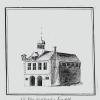
Lowestoft Town Hall
Produced to assist with the building’s regeneration and future uses
1. The Lowestoft community relocated itself (onto what is now the High Street area of a much expanded town) from what was probably its original location about a mile to the south-west, in an area now occupied by a large municipal cemetery between Normanston Drive and Rotterdam Road.

North Denes Liver Trench
- A large, filled-in trench is visible on the North Denes, a little to the east of the net-drying spars. Its presence is indicated by a slight depression in the ground and by the vegetation growing along its length. The latter is much lusher and of a different type from what is to be found on The Denes generally, showing that the trench’s infill is of a different type from the soil around it.
- The dimensions of this feature were originally eighty to ninety paces in length, on a north-south alignment, and c.
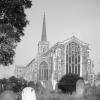
Lowestoft Listed Buildings (Historic England)
The Historic England schedule of Listed buildings for Lowestoft (inc. Kirkley, Pakefield. Oulton Broad, Oulton Village & Gunton)
All Grade II unless otherwise indicated
1. Ormiston Denes Academy (original building), Yarmouth Road.
2. Hillingdon, 24 Gunton Cliff.
3. Park Mansions, 3 & 4 North Parade.
4. Wedgewood Court, 1 & 2 North Parade.
5. Ravine Bridge.
6. Belle Vue Park.
7. Patrol Service memorial (Belle Vue Park).

From Counting House to Cosy House!
From 'Counting House' in 1812 to now a welcoming private residence , via a Bank manager taking refuge under his bed covers to avoid wartime bomb damage and a 1960's modern refit, this building has been through more than most!
Devereux wall advert restoration
Plans are afoot to try and sensitively recreate this 100 year old wall advert. It will reflect and celebrate the restoration and revitalisation going on currently throughout Lowestoft but particularly on the historic High Street.
The property owner is supportive of the project so work is now underway to raise the £8,000 the project will require.
Any info about 'Football Tea' gratefully received, especially if it's historical evidence.

Lowestoft Rental (1545)
Lowestoft Rental (1545) – Suffolk Archives, Ipswich 194/A10/71
(Formerly North Suffolk Record Office, Lowestoft)
A Lowestoft rental renewed there on the first day of June, in the thirty-seventh year of the reign of our Lord King Henry VIII, by the grace of God King of England, France and Ireland, Defender of the Faith in the said land(s) and Supreme Head of the Church of England and Ireland – relating to the annual rents of the town of Lowestoft, Shadingfield, Ellough and Willingham. [Translated from Latin]
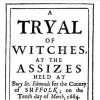
Tried for witchcraft
Two elderly Lowestoft women, Rose Cullender and Amy Denny, were tried for witchcraft at Bury St Edmunds Assizes, having been accused by their neighbours. Found guilty, they were sentenced to death by judge Sir Matthew Hale and hanged at Bury St. Edmunds on March 17th.

Black Death arrives
The Black Death arrived in Lowestoft devastating the population.The national accepted average for deaths in England is somewhere around 60%. Info on Lowestoft is very limited.

The Great Plague of Lowestoft (1603)
Many readers will know know something of London’s so-called “Great Plague”, which began in May 1665 and stretched into January 1666, and in which an estimated 100,000 people may have died out of a population of 350,000-400,000. A total of 68,596 burials is accounted for in parish records, but so intense was the rate of death from July to September that many people’s burials went unrecorded.

Lowestoft Porcelain: aspects of its origins, factory-site and workforce
CREDIT: Ivan Bunn and David Butcher
Origins
This article is in its original form, with minor alterations. It was published (with editorial adjustments and changes) in English Ceramic Circle Transactions, vol. 21 (2010), forming pp. 49-74 of that journal.





Looking into podcasting..
As a way of sharing how the project goes, getting feedback and also documenting this year long National Archives Suffolk initiative
An Inventory of the Worldly Goods of James Wilde
(14 March 1684)
An Inventory Indented of all and singular the goods and Chattels of James Wilde late of Lowestoft in the County of Suff[olk], merchant, valued and appraised the Fourteenth day of March in the year of our Lord One Thousand six hundred eighty three by Joshua Smithson, Nicholas Utting, Robert [? ] and John Aldred of Lowestoft aforesaid, Merchants, as Followeth

An Inventory of the Worldly Goods and Assets of Roger Hill
Roger Hill was a Lowestoft merchant of the second half of the sixteenth century, whose burial was recorded in the parish registers on 13 September 1588. He had made his will (Norfolk Record Office, 296 Homes) on 20 August and the inventory of his possessions (NRO INV 4/45) was taken on 16 September. He lived in what is now 31-32 High Street (not at No. 30, as I wrote in error in the LA&LHS Annual Report No.

Lowestoft Occupations 1561-1750
One of the many interesting features to emerge from the study of Lowestoft’s history over the years, and the attempts to reconstruct aspects of its past arising from the evidence discovered, is the town’s occupational structure. As can be seen in the table below, the main source in all four fifty-year blocks is parish register material, followed by probate documentation (wills and inventories of goods & chattels), with various other sources following on and with the Tithe Accounts featuring strongly in the last sub-period of all.

1999 Project Saved
A Millenium Heritage project from 1999 has been restored and saved by LO&N. It can be viewed here and even has its audio files updated to a current (playable) mp3 format as can be seen/heard here
Recorded Immigration Into Lowestoft 1436-1544
Much is heard today regarding illegal immigration into the UK from across the English Channel and occasionally the North Sea - most of it driven by difficult and dangerous conditions in the particular home countries of origin or by the perceived opportunity to start a more financially rewarding lifestyle than is possible in those same nations.

Visited by Romans
The hill on which Lowestoft was destined to rise in after ages, was probably often visited by the Roman soldiers as they passed to and fro between their fortress at Burgh and their camp in the interior, but no relics have as yet been discovered bearing testimony to either Roman or British occupation of the site of our town, though Roman coins have been found at Kirkley, and Carlton and other places in our neighbourhood.
Lothingland Invasion Scare (1584)
A constant matter of concern during the reign of Henry VIII (1509-47) was that of foreign invasion - particularly by France with the aid of its ally, Scotland. In 1535, a national audit of England’s defensive ability against foreign aggression was ordered by Henry VIII. With there being no regular Army of any kind at the time, lists had to be made of adult males able to fight in all areas of the country – and it was all done, hundred by hundred, to total up the numbers for every shire.

Get the story in the picture
In an effort to make local history images more accessible whilst also respecting the owners of the images wish not to have them copied everywhere, we came up with an interesting idea..
qr_image allows you to combine story and image to create a peice of intriguing artwork. Simply upload the image and type in the url containing the story. See a video of the result here
CREDIT: Hugh Chen

Porcelain from the 18th century
An exploration of experimental porcelain from the 18th century, it's a grand title but as you will hopefully read further this was a very small window in the history of ceramics, and relatively short lived, but one of intrigue, espionage and sabotage, fuelled by the need for a nice cup of tea and something fancy to drink it from.
In order to understano Lowestofts contribution to soft paste porcelain we need to look at the history of porcelain as a whole and explore how this material and this new industry first came to Britain and then to the east coast.
Waller’s Raid
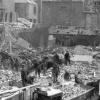
Lowestoft’s worst raid of world war II 80 years ago today on 23 January 1942, while convoys of lorries were still trucking the wreckage and rubble from the scene of devastation that became known as "The Waller's raid" in London Road North, Lowestoft, another deadly raid occurred. An alert had been sounded at 8.41 am, probably caused by German bombers seeking a convoy in the North Sea. Barely a minute had elapsed after the warning when a lone bomber, variously identified as as a Do 217 or Ju 88 emerged from the snow clouds overhead and dived towards the railway station from the NE.