
Wilde Score
Current

WildeScore
Lowestoft
United Kingdom
Named after the Wilde family who lived in the Flint House from 1588 to the 1740's when John Wilde left in trust, money for the building of a schoolhouse for the free education of boys from fishing families. £40 per year was left for maintenance and the salary of a "virtuous and learned schoolmaster who shall teach 40 boys to read, and write, and to cast accounts: and also teach them the Latin tongue".
A school remained here until WII when the pupils were evacuated; it was then used by the Air Training Corps and later bombed. Part of the old school still stands which the Lowestoft Civic Society has converted into a heritage centre for the community.
The bottom of the Score was blocked and the cottages demolished to allow the development by Birds Eye. The Score now turns right into Cumberland Place and then winds down past the shoal of herring to Whapload Road.
credit: Great Yarmouth Preservation Trust
History

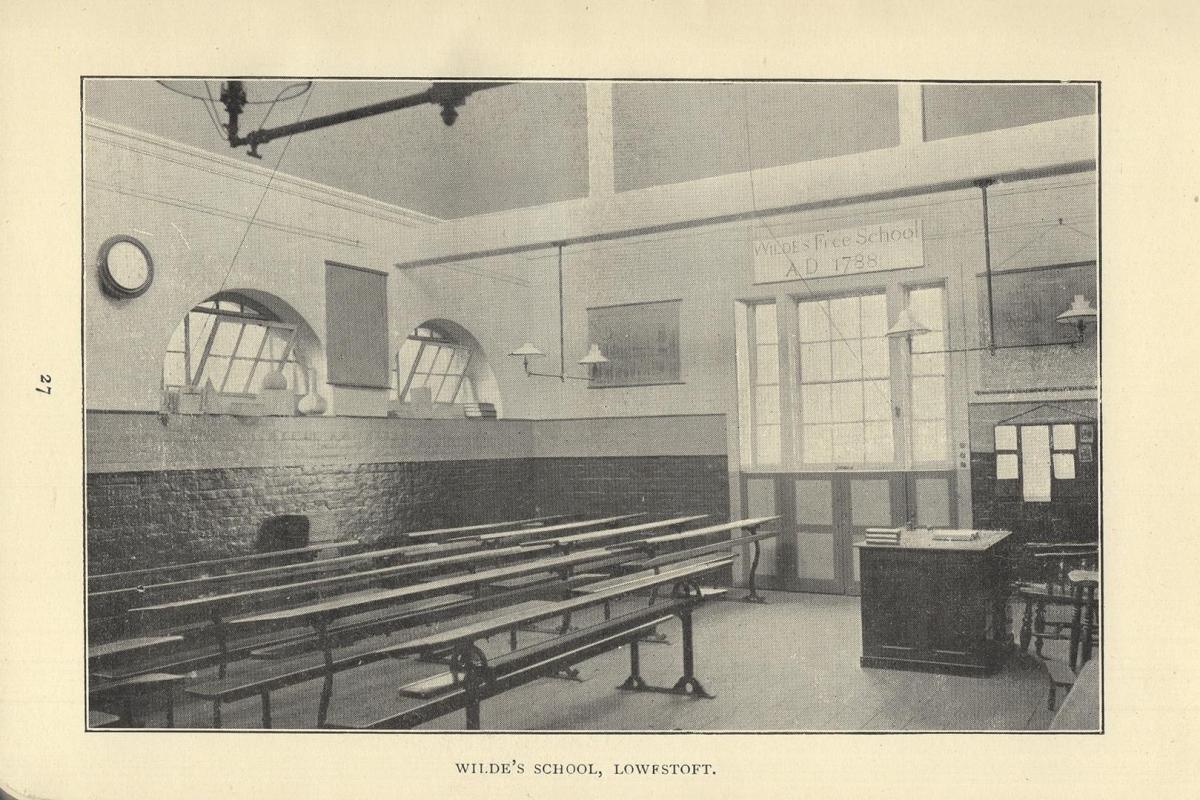
Wilde‘s Endowed School opened in 1788 (for the education of forty local boys) - in a long delayed implementation of the will of John Wilde (gentleman) of 1735. The original school building still stands on Wilde’s Score and is the HQ of the Lowestoft Heritage Workshop Centre. Wilde’s School continued in use up to the wartime evacuation of Lowestoft children in June 1940. Added buildings (not the original Schoolhouse) sustained serious bomb damage, at some point after that, and the school did not re-open after the end of WW2. CREDIT: David Butcher
The 16th Century (South) Flint House on Lowestoft's historic High Street was one of the buildings which was donated to the town for educational purposes as part of John Wilde's Charity in 1735. At the back of it, on what is now Wilde's Score, was Wilde's School. Here's a photo of the school room, from the National Union of Teachers Lowestoft Conference Souvenir book, published in 1914. CREDIT:Stu McCallum
Architecture
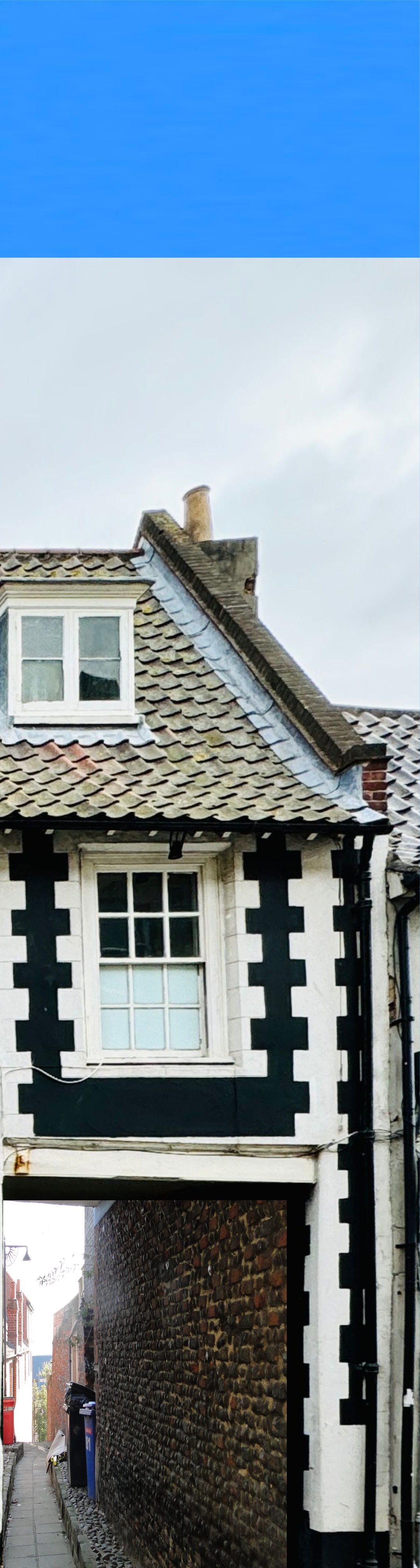
The most westerly part of the wall seen here, nearest to the High Street, is of superior quality to that situated to the east and probably of earlier date. It looks likely to have been part of the mid-late 16th century dwelling (long since subdivided into Nos. 81 & 81A and 82 & 83), which once belonged to members of the Pacy family. Samuel Pacy (merchant) and his wife Elizabeth, who lived there from the 1640s to the 1680s were - along with the Wildes next door at No. 80 - Lowestoft's wealthiest inhabitants of the time.
The bond used - of brick headers alternating with double or triple flint-cobbles - must have been quite common in the town at one time, but is now to be seen in comparatively few locations. Nos. 312 and 329 Whapload Road are good examples, as was No. 333 prior to its demolition following serious fire damage. All the bricks used would have been locally made and the flint gathered from the beach.
The patterning is attractive and is perhaps best seen about six miles away in the parish of Herringfleet, where the barn of "Manor House Farm" (having a date tablet of 1652 on its southern gable) has both chequer-work patterning and diapering visible on the building's roadside elevation. It is Grade II listed and numbered 1183352.
On the visible and historical evidence available, this particular style of brick-and-flint bond seems to have been mainly in use from the mid-late 16th century up until the late 17th/early 18th century. It declined thereafter - perhaps because of the time and expense involved in selecting flints of suitable size and shape and incorporating them into the building under construction. CREDIT:David Butcher
M5593NW WILDE'S SCORE 914-1/8/85 (South side) 03/10/77 Steps and wall on south side of Wilde's Score (Formerly Listed as: HIGH STREET (East side) Steps and wall on the south side of Wilde's Score)
GV II
Steps and walls. C18, C19 and C20. The south wall is of whole flint and brick construction to the west end where the wall doubles as an external wall to buildings and is C18. The east end of the wall is of whole coursed flints only and is C19. The steps are mainly of concrete and C20 with earlier origins. CREDIT: Historic England
Add new comment