
Late Medieval

When the Lowestoft township relocated itself onto the cliff-top during the first half of the 14th century, it had considerations to take account of other than the demands created by its inhabitants’ domestic requirements (these being mainly concerned with the terracing of the cliff to make it usable, the laying out of house-plots and a road system, and the management of the scores to give access to the beach and Denes).

Produced to assist with the building’s regeneration and future uses
1. The Lowestoft community relocated itself (onto what is now the High Street area of a much expanded town) from what was probably its original location about a mile to the south-west, in an area now occupied by a large municipal cemetery between Normanston Drive and Rotterdam Road.
Added: 19 February, 2024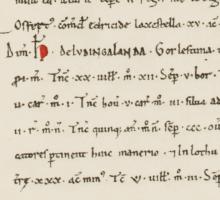
Domesday Lowestoft (1)
The further back in history that any researcher tries to go, the more difficult it is to make progress because of diminishing, usable, documentary sources. This is what makes Domesday Book so valuable.
Added: 18 February, 2024

ACHIEVEMENTS: established Balliol College, one of the oldest colleges at the University of Oxford
(c. 1210-1290) She was one of the great women of the Late Medieval period. She became Lord of the Manor of both Lothingland and Lowestoft in 1228, doing a large swap of her family lands in Cheshire, with Henry III, for many royal manors in various parts of England. This, because the King wanted a buffer zone against the Welsh. She would never have visited Lowestoft, but collected the annual rents due from Lowestoft tenants via the manor’s steward.
Added: 26 January, 2025
This is a chronological account of Lowestoft's Triangle Market, which has been in existence for over 700 years.
1208 King John issued Charter to Great Yarmouth creating Great Yarmouth as a free Burgh and other useful things, but were “...not being allowed to receive any custom of goods bought or sold in the market in Lothingland at any time of the year.” (Gillingwater's History of Lowestoft A reprint: with a chapter of more recent events by AE Murton 1897)
1251 Kessingland Market Charter granted in the reign of Henry 111
Added: 23 September, 2023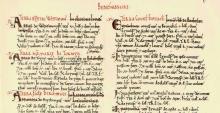
The Domesday Book gives Lothuwistoft village a population of some 16 households in three families, with ten smallholders and three slaves.
Lowestoft’s name is derived from the Viking personal name Hlothver, and toft, a Viking word for 'homestead'. The town's name has been spelt variously: Lothnwistoft, Laistoe, Lestoffe, Loystoft and Laystoft.
** see this on our history timeline ***
Added: 23 September, 2023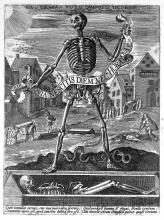
The Black Death arrived in Lowestoft devastating the population.The national accepted average for deaths in England is somewhere around 60%. Info on Lowestoft is very limited.
Added: 23 September, 2023